A Triple Barrier That Hides Extraordinary Potential
Talent may be everywhere, but access to opportunity still follows old borders. You see this most clearly where gender, geography and age collide. First generation women scholars from rural regions carry enormous potential, yet they remain one of the world’s most overlooked reservoirs of skill and insight. Their journey is shaped by a triple barrier. Social expectations limit their independence. Rural isolation restricts their networks. A lack of academic role models leaves them navigating unfamiliar systems alone. Helping them move from these beginnings to global careers is not only an issue of fairness. It is a smart and urgent investment in innovation and economic progress.
The Early Struggles Few People See
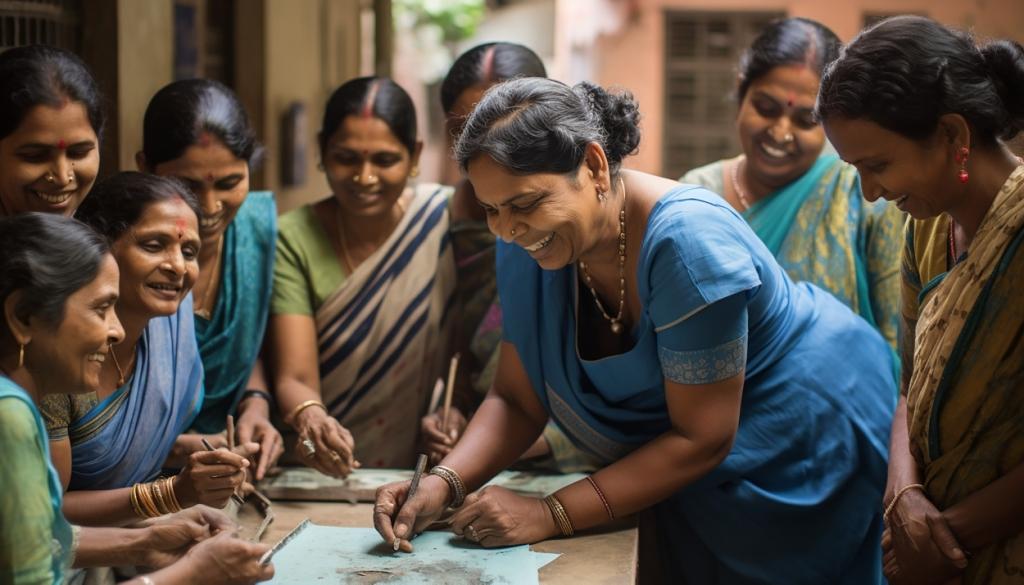
A recent 2024 study on first generation women learners in India shows the weight of these challenges clearly. Nearly half reported intense constraints across their home, educational and social lives. The roadblocks arrive long before an application form is even imagined. In many villages, a young woman grows up hearing that her dreams must adjust themselves to family needs. Her urban peers often have mentors who can decode admissions processes, internships and career paths. She learns instead through guesswork. Even when she tries to push forward, poor transport, weak connectivity and limited local resources make each step to quality education feel twice as hard.
The Economic Cliff and the Lost Career Path
Then comes the economic cliff. Most first generation scholars come from families where every rupee is stretched thin. Within many homes, boys are still prioritised because they are expected to support the family later. That leaves girls self-editing their ambitions, especially when global careers demand unpaid internships, application fees or postgraduate expenses. As a result, a deeply unfair pattern emerges. Young women who excel academically do not always translate that excellence into thriving careers. The world loses capable minds long before they reach their full power.
When Education Rises but Empowerment Lags
What complicates this story further is the unsettling disconnect between rising enrollment and low participation in the workforce. India has seen women’s higher education enrollment soar, adding more than fifty lakh students in the past decade. Yet female labour force participation still hovers around 40.3 percent. Globally, the pattern repeats. Women make up half of the working age population but contribute just over a third of the world’s GDP. In STEM fields, barely 29.3 percent of researchers are women. Even the highest seats of scientific achievement remain unevenly shared. Only 3 percent of Nobel Prizes in science went to women thirty years ago, and that number has inched up to just 4 percent. These figures reveal a simple truth. The issue is not ability. It is the world’s inability to convert promise into leadership and to support women from rural and first generation backgrounds in taking their next leap.
Turning Access into Global Careers
If we want real change, we must shift the conversation from access to transition. Educational opportunity is only the first step. Institutions and governments need to invest in resources that help young women move from classrooms into meaningful global careers. That means travel grants for international learning, stipends for internships, digital mentoring networks and structured guidance that connects rural scholars with leaders across borders. When a young woman from a village steps into a global space, she brings with her a perspective shaped by resilience. She becomes a role model in her community and a contributor to global conversations on sustainability, health and social reform. Her success lifts more than her own family. It lifts the collective imagination.

How Lotus Petal Foundation Lights the Way
This is where organisations like Lotus Petal Foundation step in with intent and clarity. The foundation identifies young women from migrant and low-income backgrounds in Gurugram who carry quiet reserves of potential and walks with them through the steep climb of education and opportunity. Many arrive with dreams that feel larger than their circumstances, yet they push forward with remarkable grit.
But the work doesn’t stop in the cities. Through Vidya Sahyog, our live interactive teaching platform, we connect with girl students in some of the most remote corners of our country, including KGBVs and other schools. Technology becomes the bridge, but the real shift comes from the pedagogy — teaching that is simple, structured and rooted in what works for first-generation learners. It strengthens their foundations and opens up possibilities they’ve never had access to before.
Over the years, we have seen alumni step confidently into global pathways. One of them, Gudiya, now works as a software testing executive with Unify Dots, an international organisation, proving that the right support can turn early disadvantages into a springboard. The foundation continues this work by offering scholarships to girl students who want to pursue higher education and global careers.
Each scholarship becomes a door. Each young woman who steps through becomes evidence of what can happen when opportunity finally meets talent — whether she comes from a crowded urban settlement or a quiet rural village where dreams once stayed hidden.
Shared by : Kushal Raj Chakravorty,
 Founder & Managing Trustee