
I thought working in a startup had prepared me for becoming a founder. I understood firefighting. I knew what an unstructured day looked like — when you started the morning with five priorities and ended the day having solved five completely different problems. I was comfortable wearing multiple hats, making quick decisions and figuring things out along the way. And yet, becoming a founder felt different. Because there is a difference between working in uncertainty and owning the uncertainty. The following insights are based on inputs from Mrs. Amneet Kaur Sahdra, Founder of Catalyze.
Here are some of the biggest lessons this transition is teaching me:
1. Ownership feels very different when everything stops with you
I had always considered myself someone who took ownership at work. But as a founder, ownership takes on an entirely different meaning. The strategy, the customer, the finances, the team, the positioning, the mistakes – eventually, everything finds its way back to you.
There is no “someone else will figure this out.” You are that someone.
And that has changed my understanding of accountability more than any leadership role ever did.
2. Clarity matters more than certainty
In corporate roles, experience often gives you the confidence to know what to do next. As a founder, there are days when there simply isn’t a right answer.
Should we build this now? Is this the right positioning? Will customers pay for it? Should we persist or change direction?
I am learning that leadership isn’t about having certainty before you move.
It is about creating enough clarity to make the next responsible decision.
3. Fall in love with the problem, not your solution
This has been one of my biggest lessons. An idea can sound brilliant until it meets a customer.
Then come the questions, objections, realities and perspectives you hadn’t considered. Entrepreneurship has taught me to hold my ideas more loosely.
If the problem is worth solving, the solution should be allowed to evolve. Sometimes changing your mind isn’t inconsistency. It is evidence that you are listening.
4. Execution is the real strategy
Ideas are exciting. Execution is humbling. There is an enormous distance between saying, “We should do this” and actually making it happen. Every idea eventually has to survive customers, pricing, timelines, resources and the realities of the market. I have become much more conscious of asking:
Can we actually execute this well?
Because a simple idea executed consistently will often travel further than an ambitious idea that never leaves the drawing board.
5. A founder title is given on Day 1. Founder credibility isn’t.
Perhaps this has been the most personal shift. For years, my professional identity came with experience, a designation and an organisation behind me. When you start something of your own, you begin earning credibility differently.
One conversation at a time. One customer at a time. One difficult decision at a time. One small win at a time.
My corporate career taught me ownership. My startup experience taught me agility.
Founding something is teaching me what it means to carry both – when there is no larger system to fall back on.
And perhaps that is the biggest leadership lesson of all:
The transition from corporate to founder isn’t simply about building a business. It is about becoming the person capable of carrying what you are trying to build.
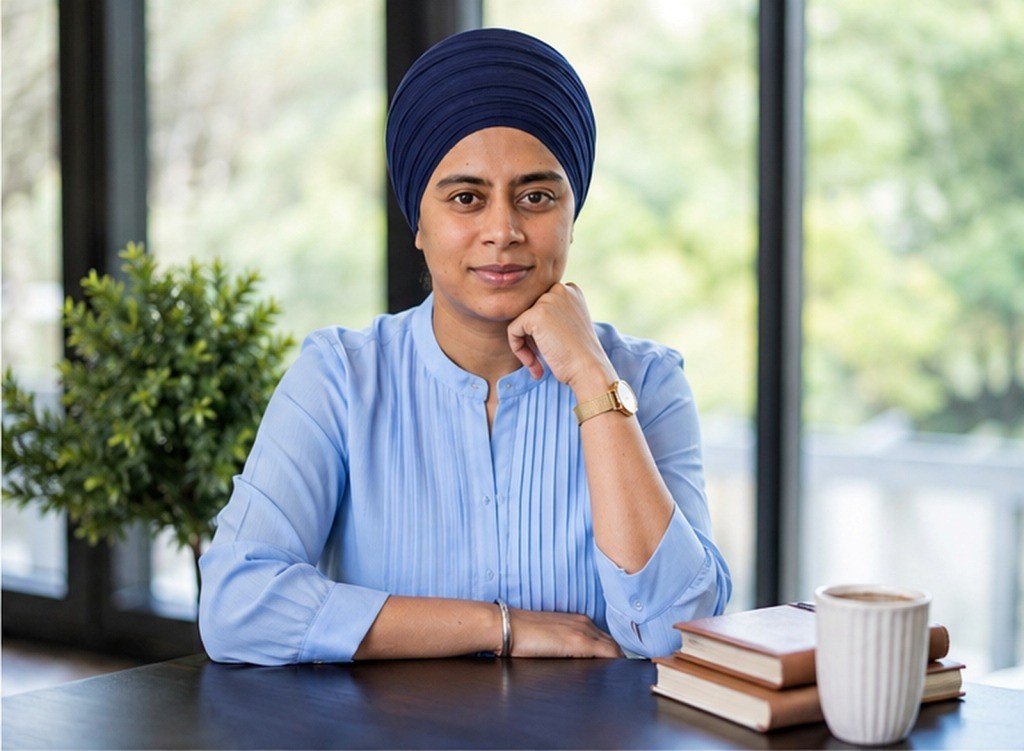
About Amneet Kaur
Amneet Kaur is an HR and Business Operations Leader with 15+ years of experience across organizations including Future Group, Skechers and Outsized. An ISB alumna, she is the Founder of Catalyze and works at the intersection of career readiness, workplace performance and people development.
About Catalyze
Catalyze is a career and workplace readiness platform focused on bridging the gap between academic potential and professional performance. It works with students, educational institutions and organizations through practical, experiential interventions designed to build confidence, capability and workplace readiness.