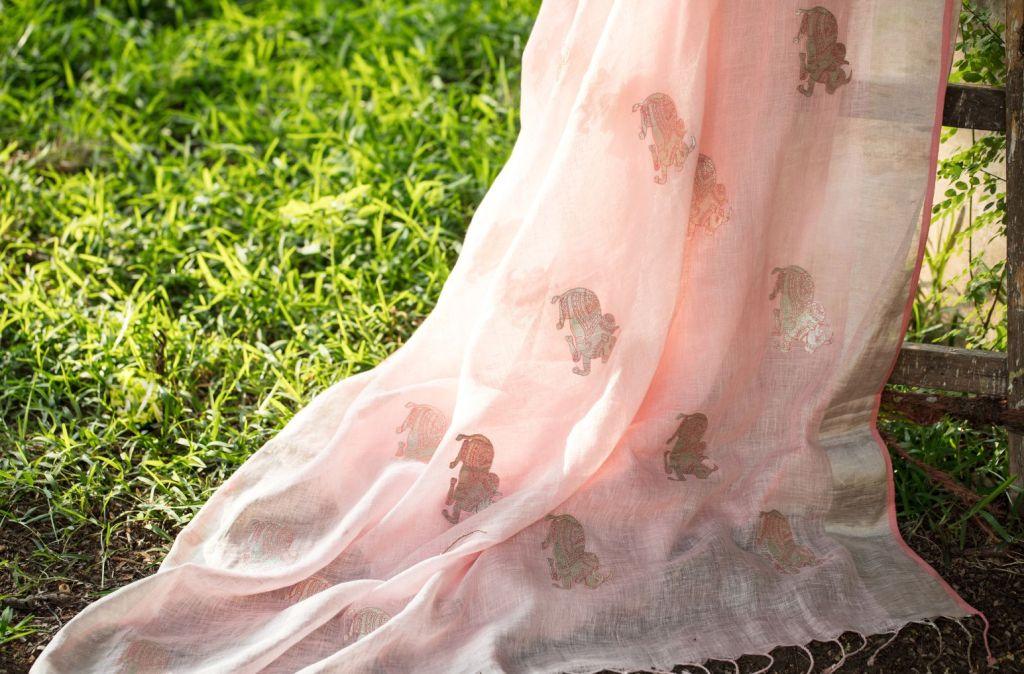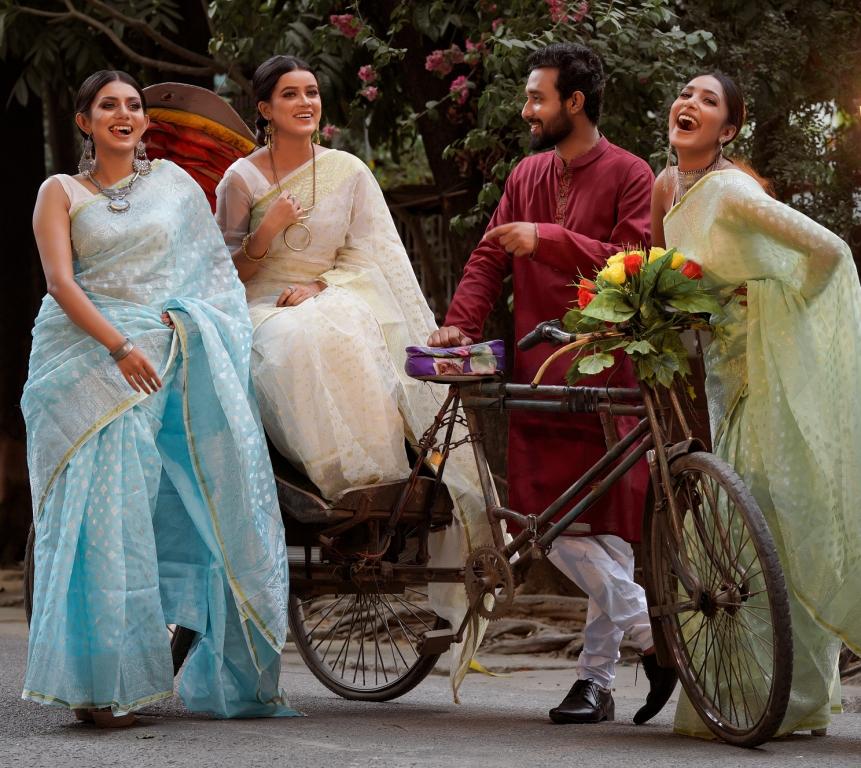
Saree and Feminism are as inseparable as the head and tail of a coin. The Saree/Sari is mentioned in the Rig Veda as a long piece of cloth used as a garment to cover the body by both men and women.
Gradually with the advent of looms to weave fine textured cloth and dyeing process, this piece of cloth evolved into beautiful, colorful sarees with intricate designs, attractive prints, contrasting borders and Pallus to be worn exclusively by women in India and some South Asian countries like Nepal, Bangladesh and Sri Lanka.
The saree represents the Indian woman, her culture, tradition, nativity, ancestry, personality, individuality, character, taste etc. Ravi Verma’s famous paintings of goddesses show them draped only in sarees. The saree has also played a crucial role in “Draupadi Vastraharan” in the epic Mahabharata. The saree forms a part and parcel of a woman’s Trousseau and is preserved as an heirloom in some families.
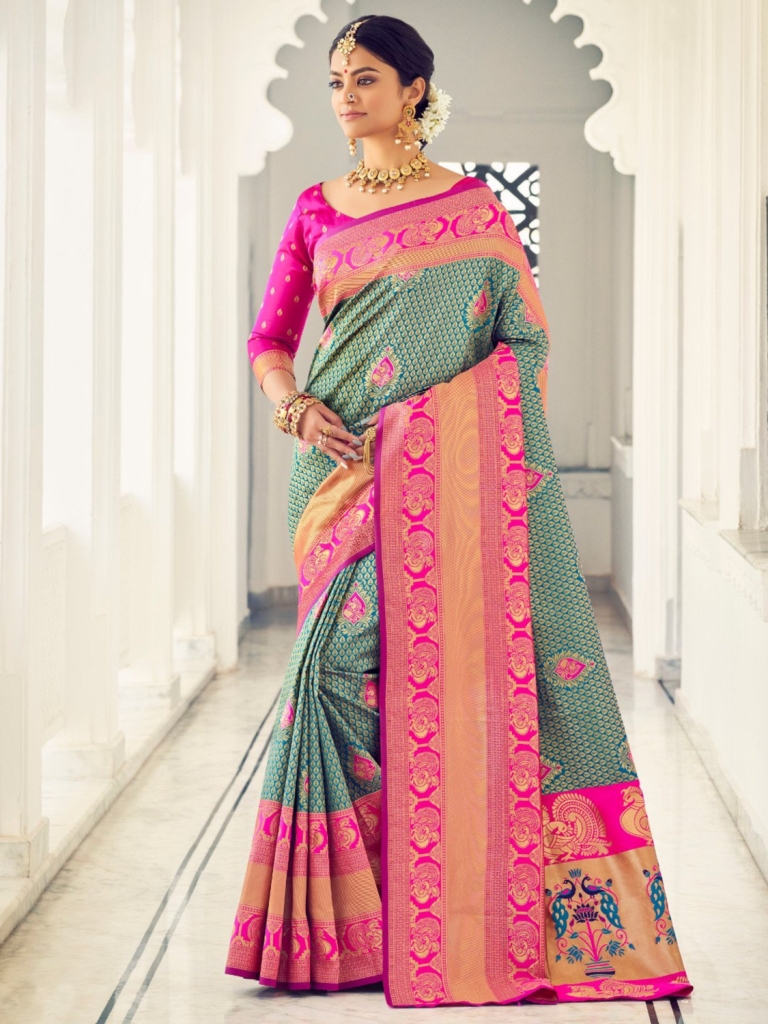
In South India, when a girl comes of age, she is gifted a new saree by her maternal grandparents or uncle. Sarees are given as offerings to goddesses in the temple and as gifts to ladies on family weddings or any other auspicious occasion. A unique saree depicting important episodes of Ramayana and Rama Nama printed in twelve languages is to be offered to Goddess Sita Mata in the Shri Ram temple in Ayodhya at the time of inauguration on 22nd January 2024.
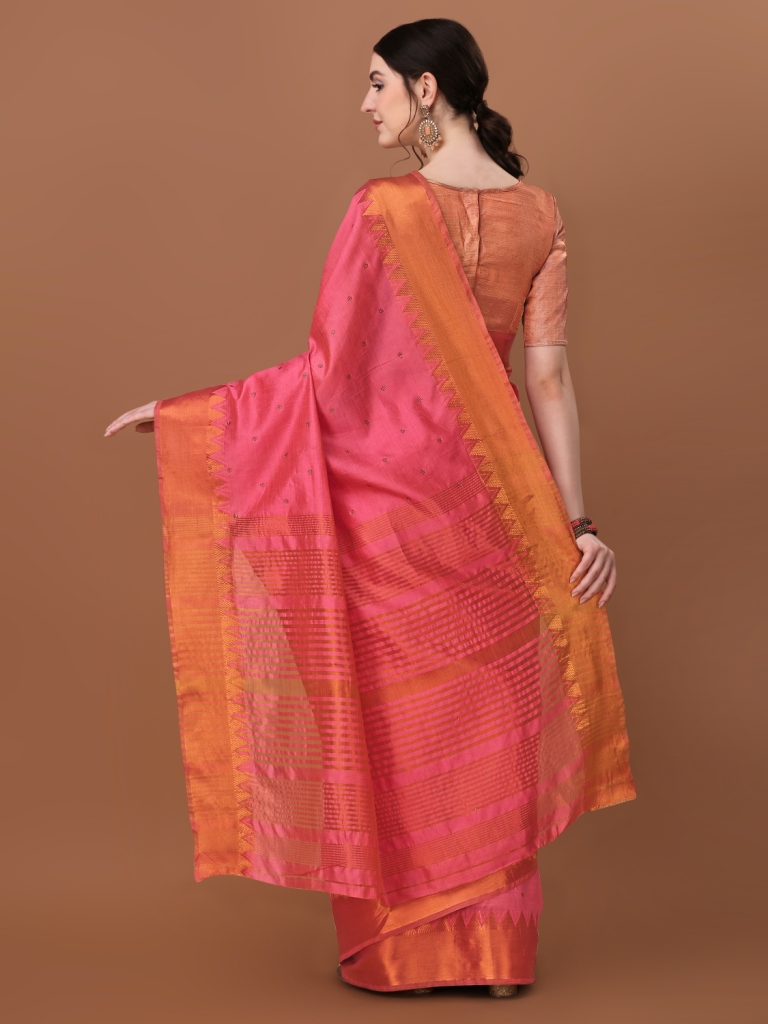
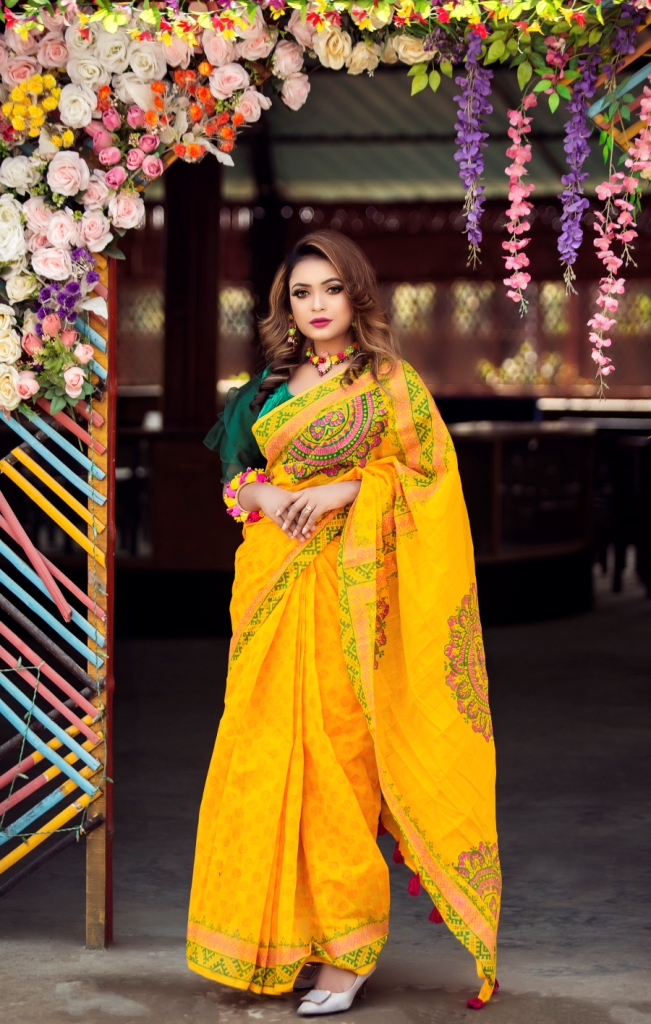
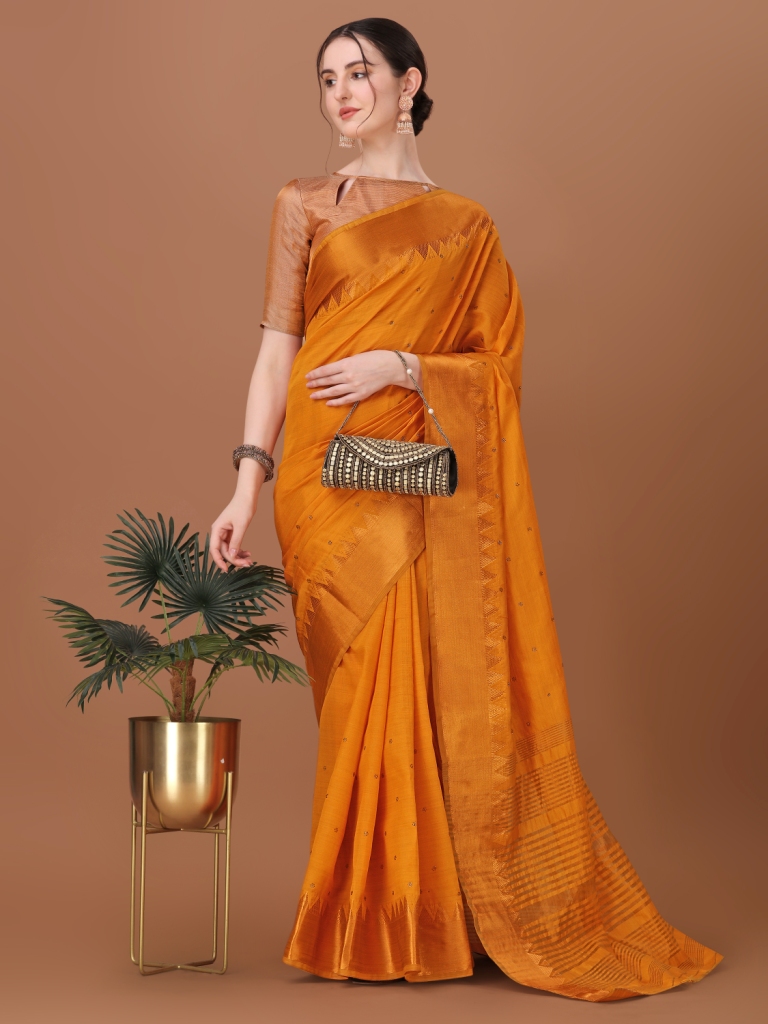
Every woman, irrespective of her class, status or profession has a great passion for sarees. It is a very common sight to see women thronging the saree stores during festive seasons like Navaratri or Diwali. Umpteen varieties of sarees from different states and in different price ranges fill the shelves in the stores and covet the ladies. They like to flaunt their wealth by wearing expensive Benares or Kanchipuram Silk sarees for weddings. Modern trend is to wear designer sarees for Sangeet and Mehndi functions.
Whatever type it is, a saree, draped well, reflects the inner beauty and charm of the wearer. It makes one look elegant, graceful and glamorous. No other attire can out beat it in this aspect.
In all, “Dress maketh a Man but only a Saree maketh a Woman.” Saree is indeed a portrayal of Feminism.

Written By : NEELA SWAMINATHAN