

Robotic-assisted surgery has become an important advancement in modern surgical practice, including orthopaedics. These insights, provided by Dr. Rahul Modi, Orthopedic Surgeon at Kapadia Hospital, highlight that while the technology enhances precision and consistency, it is often misunderstood by patients. As surgeons, it is essential that we address these misconceptions clearly so patients can make informed decisions with realistic expectations.
Myth 1: The robot performs the surgery independently
Fact: The surgeon is in complete control at all times
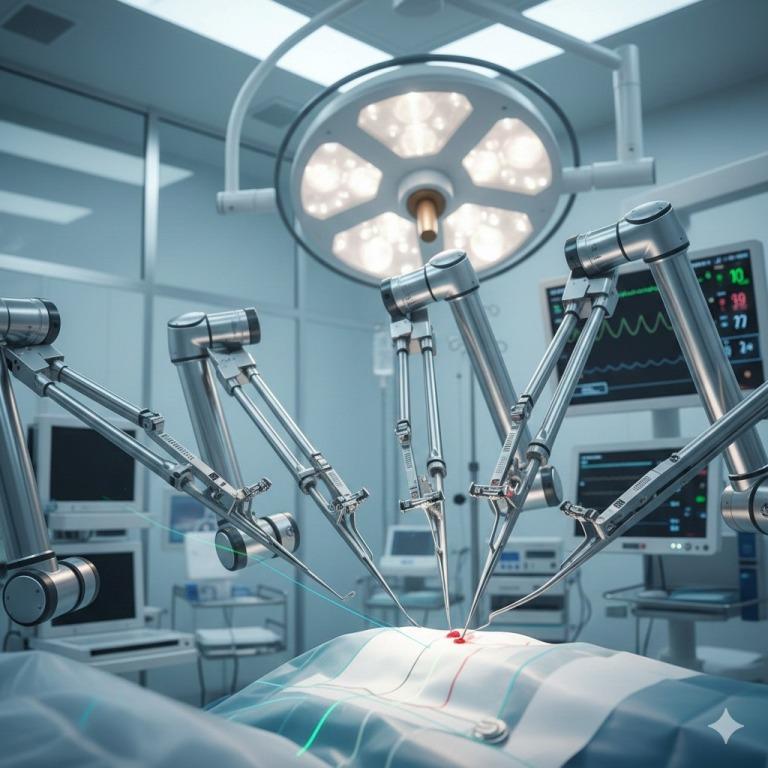
Robotic surgery does not mean the operation is performed by a machine on its own. The robot is a highly sophisticated surgical instrument that precisely replicates the surgeon’s hand movements.
Every cut, movement, and action is controlled by the surgeon in real time. The robot has no decision-making ability and cannot act independently. Surgical judgment, experience, and responsibility remain entirely with the operating surgeon.
Myth 2: Robotic surgery is only meant for very complex or high-risk cases
Fact: It is commonly used for both complex and routine procedures
While robotic assistance is particularly useful in technically demanding surgeries requiring high precision, it is also widely used in routine procedures. In orthopaedics and other specialties, robotic systems can enhance accuracy, reproducibility, and ergonomic comfort for the surgeon.
The choice of robotic assistance depends on whether it adds measurable benefit for a given procedure—not on complexity alone.
Myth 3: Robotic surgery means no pain and instant recovery
Fact: Recovery varies and depends on multiple factors
Robotic surgery is usually minimally invasive, which often results in smaller incisions, reduced blood loss, and potentially faster recovery. However, no surgery is completely pain-free.
The outcome of any medical intervention depends on several interrelated factors, including the specific procedure performed, the patient’s overall health and existing comorbidities, their adherence to rehabilitation protocols, and their individual healing response.
Robotic assistance may help reduce surgical trauma, but it does not eliminate the normal healing process.
Myth 4: Robotic surgery is always the best or only option
Fact: It is one of several surgical approaches
Robotic surgery is not a replacement for conventional open or laparoscopic techniques. Each approach has its own indications and limitations.
A responsible surgeon selects the most appropriate surgical method by carefully considering the patient’s anatomy, the nature of the pathology, any history of previous surgeries, and the expected functional outcome.
The best surgery is the one most appropriate for the patient, not necessarily the most technologically advanced.
Myth 5: Older patients are not suitable candidates for robotic surgery
Fact: Age alone is not a contraindication
Chronological age by itself does not determine suitability for robotic surgery. Many elderly patients can benefit from minimally invasive techniques due to reduced tissue damage and potentially quicker mobilization.
What matters more is the patient’s overall physiological fitness, bone quality, and medical condition—not age alone.
Robotic surgery is a powerful tool that enhances surgical precision, but it is not a miracle solution. Outcomes still depend on correct indications, surgical expertise, patient selection, and post-operative care.
Patients should have an open discussion with their surgeon to understand whether robotic assistance truly offers an advantage in their specific case.
An informed patient is always better positioned to achieve a successful surgical outcome.