There have always been professional spaces that didn’t naturally feel inclusive. The rooms where key decisions were made and leadership took shape often looked the same – and women were rarely at the centre of that narrative. Not because they lacked capability, but because tradition quietly shaped expectations. Over time, I realised that sometimes the first barrier to break isn’t structural – it’s perceptual.
But I have always believed that leadership does not come with a gender label. It comes with clarity, resilience, and the willingness to show up – every single day.
My journey into the business was not driven by a grand plan to “break barriers.” In fact, stepping into a family-led enterprise initially felt familiar, almost comfortable. However, comfort fades quickly when you begin to understand the layers of perception that exist – especially as a woman in a sector where negotiations are tough, transactions are high-value, and credibility is constantly evaluated.
One of the earliest lessons I learned was that acceptance is not automatic. Respect is earned – patiently, consistently, and often silently. There were moments when my involvement in business discussions was underestimated. There were instances when industry counterparts assumed that in-depth knowledge would naturally come from a male colleague. Instead of reacting defensively, I chose to respond with preparation. I focused on learning every detail – from how projects move from idea to execution, to how teams collaborate, and how relationships are built and sustained.
In industries like ours, competence speaks louder than assumptions. Over time, the same rooms that once felt skeptical began to feel collaborative.
Breaking barriers, I’ve realised, is rarely dramatic. It is not always about making bold statements. Sometimes, it is about persistence – staying at the table, asking the right questions, and building trust brick by brick. As Ratan Tata once said, “Take the stones people throw at you, and use them to build a monument.” I have carried this thought with me – every doubt, every hesitation from others, can either discourage you or strengthen your resolve.
For women entering traditionally male-dominated sectors, one of the biggest challenges is not capability – it is conditioning. We are often conditioned to second-guess ourselves, to soften our ambition, or to seek validation before taking space. But leadership demands ownership. It requires you to believe that your perspective adds value – whether you are discussing production metrics or long-term strategy.
At the same time, I strongly believe that women do not need to replicate male leadership styles to succeed. Strength does not have to look aggressive. Authority does not have to sound loud. In my experience, empathy, collaboration, and attention to detail are not weaknesses – they are strategic advantages. Understanding people – your team, your clients, your partners – is as critical as understanding numbers.
Another important shift that needs to happen is within organizations themselves. True inclusion is not about symbolic representation. It is about creating ecosystems where women can grow without constantly having to prove their legitimacy. Flexible structures, mentorship, equal exposure to decision-making, and financial transparency go a long way in building confidence and capability.
I have also come to realise that success, especially as a woman, wears many hats. It is not limited to business milestones or expansion plans. It is equally present in the pride of building a team that trusts you, in mentoring younger women who are stepping into leadership roles, and in balancing professional ambition with personal fulfilment.
There will always be challenges. There will be rooms where you are the only woman. There will be negotiations where you feel underestimated. But every time a woman holds her ground, every time she makes a strategic decision, every time she signs a deal with conviction – the definition of “traditional” begins to change.
Breaking barriers is not about fighting the system; it is about evolving it. It is about demonstrating, through action, that leadership is built on competence, character, and courage – not gender.
And perhaps the most powerful change happens quietly: when the next generation of women no longer sees these industries as male-dominated, but simply as spaces of opportunity.
That, to me, will be true progress.
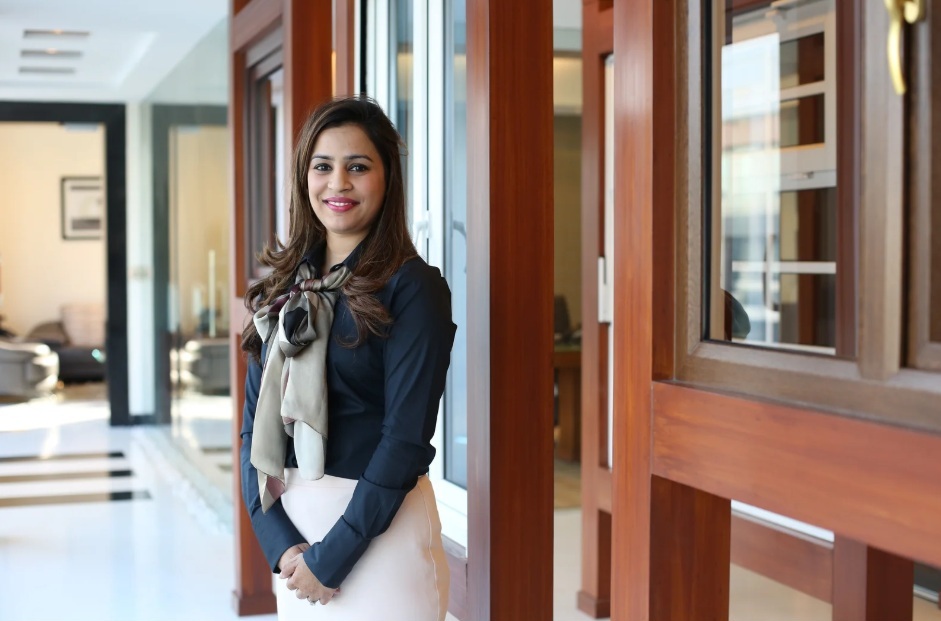
Shared by : Aanchal Bansal,
Director, Window Magic