
Menstruation is one of the most ordinary biological processes, and yet it continues to be treated as an exception in public life just because it is gender specific. Almost every woman lives with it for decades, planning school days, work hours, travel, and even social interactions around it. And still, our systems behave as if menstruation is rare, inconvenient, or optional to accommodate. Over time, my work has made one thing clear to me: ‘the real issue is no longer silence. It is a follow-through.
Through my association with Aayom Welfare Society, I have spent years engaging with women and girls across very different realities – urban settlements, rural areas, jails, and informal workplaces. In most of these spaces, conversations around menstruation have already happened. Girls can explain what a period is. Women know what hygiene means. Yet, their daily experiences remain unchanged. That contradiction is what forced me to rethink our approach.
Menstrual awareness, in many cases, has become symbolic. Sessions are conducted, banners are displayed, and data is collected. But once the activity ends, the responsibility of managing menstruation quietly and without disruption falls entirely on women. Dignity does not come from knowing; it comes from being supported. And support is deeply structural.
What ground-level work has repeatedly shown me is that menstruation is not just a health issue, it is an access issue. A school without a functional toilet can undo every lesson on hygiene. A workplace without privacy or flexibility can turn a normal bodily process into daily stress. Women do not struggle only because they lack information; they struggle because systems are not designed keeping them in mind.
While working at Aayom, I have met girls who can effectively tell about menstruation but stop attending school during periods. I have met women who reuse unsafe materials not out of ignorance, but because affordability and access leave them with no alternatives. I have met inmates and informal workers who understand dignity but are denied the right to choose their sanitary products. These are not failures of awareness but of priority.

Menstrual hygiene needs to be looked at the same way as we look at the roads, water, or electricity – as something utterly essential. Functional toilets, waste disposal systems, affordable and dignified access to products, and supportive institutional policies are not “add-ons.” They are basic requirements. Without them, menstruation becomes a barrier to education, employment, and participation in public life.
Another lesson learnt from my experience is that menstruation cannot remain a women-only conversation. When men are excluded, stigma finds space to survive in families, offices, and decision-making rooms. When boys grow up seeing menstruation as normal, workplaces become more humane and households more open.
What I have learned through Aayom is that real change is often quiet. It looks like a toilet that works every day, a woman not having to explain herself while being uncomfortable, and policies that are implemented, not just announced. These actions rarely make headlines, but they fundamentally alter how women experience their usual being along with the biological process of their body.
Menstrual dignity is not about dramatic interventions or one-time campaigns. It is about acknowledging that periods are not disruptions to daily life; they are part of it.
To summarize, I would say we do not need more applause at the end of awareness sessions. We need sustained action that continues long after. Menstrual dignity will be achieved not when we talk about it more, but when women and girls no longer have to plan their lives around managing it in silence. That is the shift my work has convinced me is necessary and long overdue.
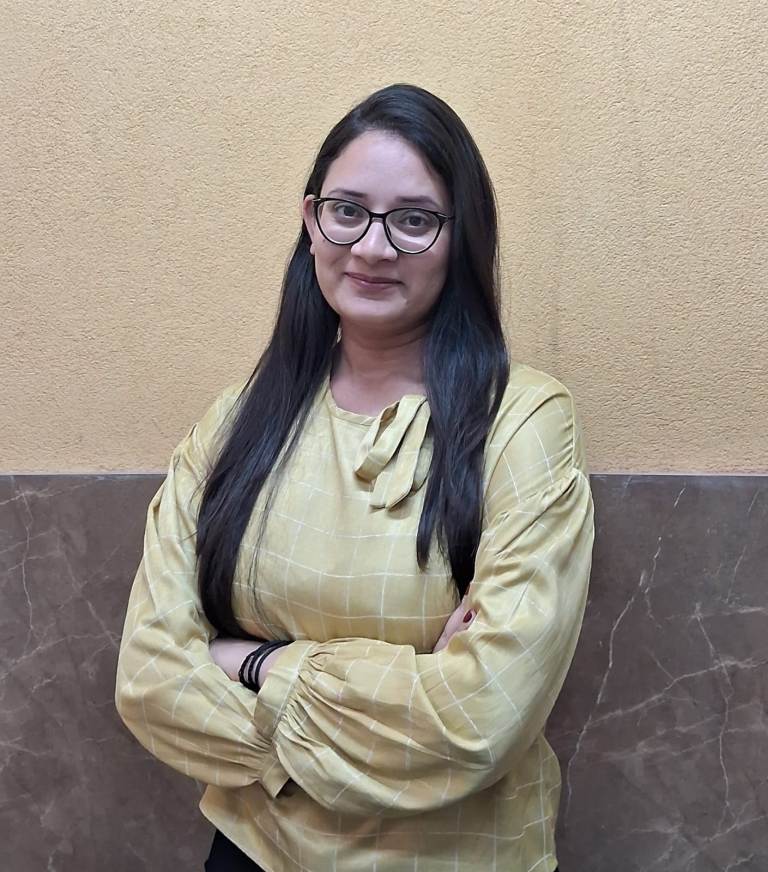
Shared by : Nitika Dhiman,
National Head-Women Front & Chief-Communications & Engagement of Aayom Welfare Society